Blockchain
Blockchain Land Registry in India: How a National Blockchain Registry Can Fix Land Title Uncertainty
Blockchain Land Registry in India: How a National Blockchain Registry Can Fix Land Title Uncertainty
Blockchain Land Registry in India: How a National Blockchain Registry Can Fix Land Title Uncertainty
Introduction to Blockchain Land Registry in India
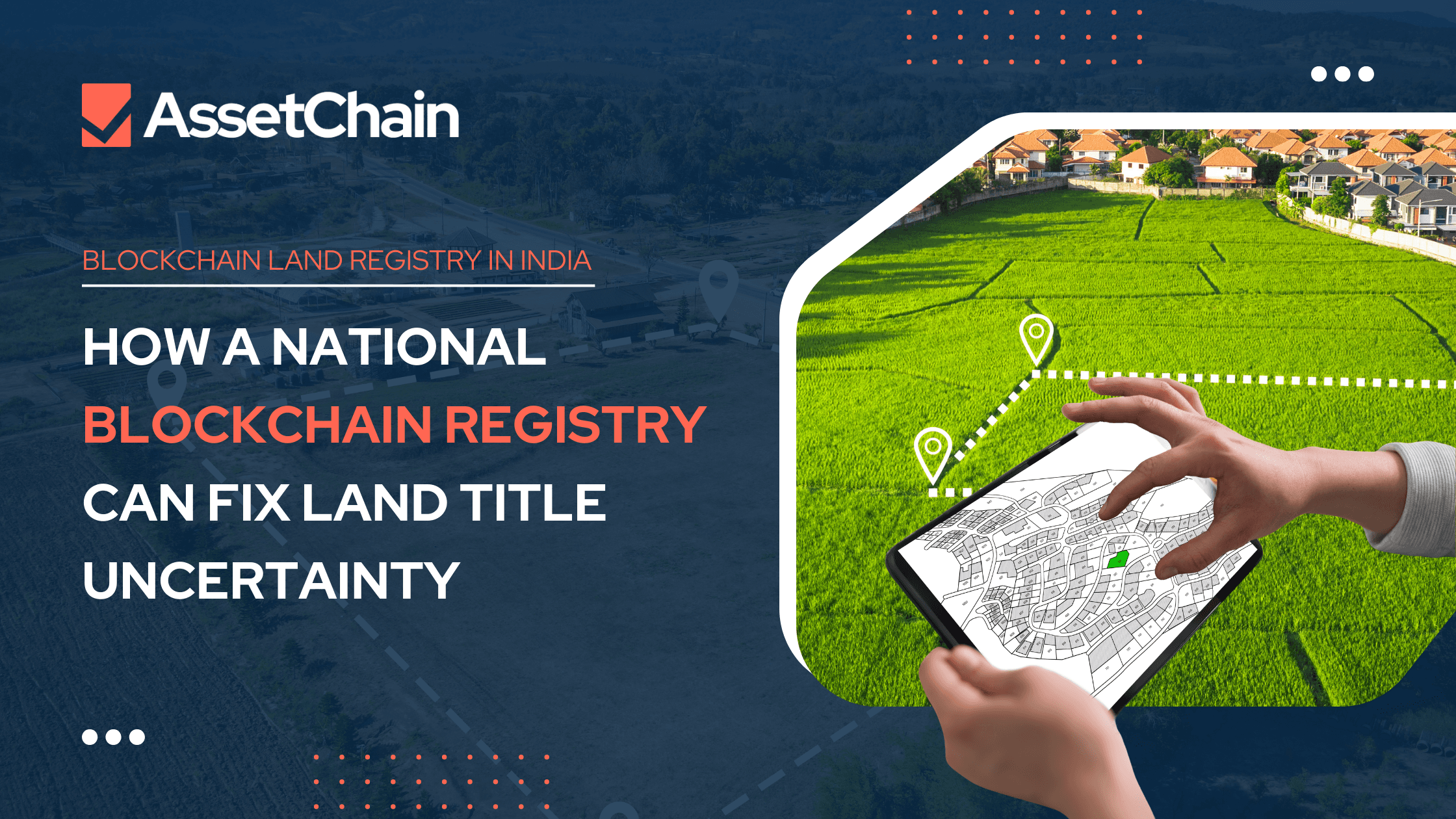
Blockchain Land Registry in India is emerging as a powerful solution to one of the country’s most persistent problems: land title uncertainty. Across India, unclear ownership records, outdated paper documents, and overlapping claims have led to disputes that drag on for decades. Property litigation forms a large share of civil cases in Indian courts, affecting individuals, investors, and infrastructure development. A national land registry ledger using blockchain technology can provide transparency, security, and efficiency. By digitizing and securing land records on a tamper-proof system, India can move toward reliable property ownership and stronger economic growth.
The Problem: Land Title Uncertainty in India
India’s land record system is fragmented and often inconsistent. Different states maintain separate systems, many of which rely on manual records or partially digitized data. Even where digitization has taken place, the data may not be fully verified or regularly updated.
Land ownership in India is generally “presumptive,” not conclusive. This means government records are not always guaranteed proof of ownership. As a result, buyers must conduct extensive due diligence before purchasing property. Disputes often arise because multiple parties claim rights over the same land.
This uncertainty has wide consequences. Farmers struggle to secure loans without clear titles. Urban buyers risk purchasing disputed property. Infrastructure projects face delays due to ownership conflicts. A secure and unified solution is needed, and that is where a Blockchain Land Registry in India becomes relevant.
What Is a Blockchain-Based Land Registry?
A blockchain-based land registry is a digital ledger that records property ownership transactions in a decentralized and tamper-resistant manner. Every transaction, such as sale, inheritance, or transfer, is recorded as a block in a chain. Once added, it cannot be altered without consensus from the network.
Unlike traditional databases controlled by a single authority, blockchain distributes records across multiple nodes. This reduces the risk of manipulation, fraud, or data loss. Each transaction is time-stamped and traceable, creating a transparent history of ownership.
In the Indian context, this would mean moving from paper-based or isolated state-level systems to a national blockchain registry that connects states under a unified framework.
How Blockchain Land Registry in India Can Fix Title Uncertainty
1. Creating Immutable Ownership Records
A Blockchain Land Registry in India would ensure that once a land transaction is verified and recorded, it cannot be tampered with or erased. This immutability protects owners from fraudulent alterations and unauthorized changes in official records. Buyers would gain confidence knowing that the property’s ownership history is transparent, secure, and permanently stored in a decentralized ledger system.
2. Establishing a Single Source of Truth
Currently, land records are often scattered across revenue departments, registration offices, and local authorities. A blockchain-based system can integrate these databases into one synchronized national ledger. This unified approach reduces discrepancies between records and ensures that all stakeholders, including banks and courts, rely on the same verified data.
3. Reducing Litigation and Disputes
Land disputes in India frequently arise due to overlapping claims and forged documents. By using blockchain technology, every transaction would be validated before being recorded. This verification process minimizes the possibility of duplicate sales and fraudulent transfers, thereby reducing the number of disputes reaching courts and improving trust in property transactions.
4. Improving Access to Credit and Investment
Clear land titles are essential for securing loans and attracting investment. A Blockchain Land Registry in India would allow financial institutions to verify ownership instantly, reducing paperwork and risk. Farmers and small landowners would benefit from easier access to credit, while investors would feel more secure in real estate transactions backed by verified digital records.
5. Enhancing Transparency and Accountability
Because blockchain transactions are time-stamped and visible to authorized participants, the scope for corruption and manipulation decreases significantly. Officials cannot alter records without leaving a digital trace. This accountability promotes cleaner governance and builds public trust in the land administration system.
India-Specific Reform Considerations
Implementing a Blockchain Land Registry in India requires careful planning and coordination between the central and state governments. Land is a state subject under the Constitution of India, so reforms must respect federal structures while promoting national integration.
The government has already initiated digital land record modernization programs, such as the Digital India Land Records Modernization Programme (DILRMP). A blockchain layer could enhance these existing systems rather than replace them entirely. States can gradually migrate verified records onto the blockchain while maintaining local administrative control.
Legal reforms would also be necessary. For blockchain records to serve as conclusive proof of ownership, laws must explicitly recognize digital entries as legally binding. Without this step, blockchain would remain a technical improvement but not a complete solution.
Data privacy and cybersecurity standards must be robust. Although blockchain is secure by design, access controls and encryption protocols are essential to protect sensitive personal information linked to land ownership.
Challenges to Implementation
Despite its promise, a Blockchain Land Registry in India faces certain challenges. Infrastructure gaps in rural areas may limit digital adoption. Training government officials and staff is essential to ensure accurate data entry and management. Initial digitization and verification of legacy records could be time-consuming and resource-intensive.
Public awareness is another factor. Citizens must understand how the system works and trust its fairness. Without awareness campaigns and transparent communication, resistance to change may slow implementation.
However, these challenges are manageable with phased rollout strategies, pilot projects, and strong political commitment.
The Way Forward
A national land registry ledger using blockchain technology offers India an opportunity to modernize its property system and strengthen economic foundations. By providing immutable records, reducing disputes, and improving transparency, Blockchain Land Registry in India can transform how property ownership is documented and verified.
Pilot projects in selected states could demonstrate practical benefits and refine the model before nationwide expansion. Collaboration between technology experts, policymakers, legal scholars, and state governments will be essential for success.
Clear land titles empower citizens. They enable investment, reduce legal uncertainty, and support infrastructure growth. As India continues its digital transformation journey, adopting a Blockchain Land Registry in India could be one of the most impactful reforms for long-term economic stability and governance improvement.
In conclusion, land title uncertainty has long hindered India’s development. A carefully designed and legally supported Blockchain Land Registry in India can provide the clarity, trust, and efficiency needed to move forward. By embracing blockchain technology in land administration, India can create a more secure future for property owners and investors alike.
Introduction to Blockchain Land Registry in India
Blockchain Land Registry in India is emerging as a powerful solution to one of the country’s most persistent problems: land title uncertainty. Across India, unclear ownership records, outdated paper documents, and overlapping claims have led to disputes that drag on for decades. Property litigation forms a large share of civil cases in Indian courts, affecting individuals, investors, and infrastructure development. A national land registry ledger using blockchain technology can provide transparency, security, and efficiency. By digitizing and securing land records on a tamper-proof system, India can move toward reliable property ownership and stronger economic growth.
The Problem: Land Title Uncertainty in India
India’s land record system is fragmented and often inconsistent. Different states maintain separate systems, many of which rely on manual records or partially digitized data. Even where digitization has taken place, the data may not be fully verified or regularly updated.
Land ownership in India is generally “presumptive,” not conclusive. This means government records are not always guaranteed proof of ownership. As a result, buyers must conduct extensive due diligence before purchasing property. Disputes often arise because multiple parties claim rights over the same land.
This uncertainty has wide consequences. Farmers struggle to secure loans without clear titles. Urban buyers risk purchasing disputed property. Infrastructure projects face delays due to ownership conflicts. A secure and unified solution is needed, and that is where a Blockchain Land Registry in India becomes relevant.
What Is a Blockchain-Based Land Registry?
A blockchain-based land registry is a digital ledger that records property ownership transactions in a decentralized and tamper-resistant manner. Every transaction, such as sale, inheritance, or transfer, is recorded as a block in a chain. Once added, it cannot be altered without consensus from the network.
Unlike traditional databases controlled by a single authority, blockchain distributes records across multiple nodes. This reduces the risk of manipulation, fraud, or data loss. Each transaction is time-stamped and traceable, creating a transparent history of ownership.
In the Indian context, this would mean moving from paper-based or isolated state-level systems to a national blockchain registry that connects states under a unified framework.
How Blockchain Land Registry in India Can Fix Title Uncertainty
1. Creating Immutable Ownership Records
A Blockchain Land Registry in India would ensure that once a land transaction is verified and recorded, it cannot be tampered with or erased. This immutability protects owners from fraudulent alterations and unauthorized changes in official records. Buyers would gain confidence knowing that the property’s ownership history is transparent, secure, and permanently stored in a decentralized ledger system.
2. Establishing a Single Source of Truth
Currently, land records are often scattered across revenue departments, registration offices, and local authorities. A blockchain-based system can integrate these databases into one synchronized national ledger. This unified approach reduces discrepancies between records and ensures that all stakeholders, including banks and courts, rely on the same verified data.
3. Reducing Litigation and Disputes
Land disputes in India frequently arise due to overlapping claims and forged documents. By using blockchain technology, every transaction would be validated before being recorded. This verification process minimizes the possibility of duplicate sales and fraudulent transfers, thereby reducing the number of disputes reaching courts and improving trust in property transactions.
4. Improving Access to Credit and Investment
Clear land titles are essential for securing loans and attracting investment. A Blockchain Land Registry in India would allow financial institutions to verify ownership instantly, reducing paperwork and risk. Farmers and small landowners would benefit from easier access to credit, while investors would feel more secure in real estate transactions backed by verified digital records.
5. Enhancing Transparency and Accountability
Because blockchain transactions are time-stamped and visible to authorized participants, the scope for corruption and manipulation decreases significantly. Officials cannot alter records without leaving a digital trace. This accountability promotes cleaner governance and builds public trust in the land administration system.
India-Specific Reform Considerations
Implementing a Blockchain Land Registry in India requires careful planning and coordination between the central and state governments. Land is a state subject under the Constitution of India, so reforms must respect federal structures while promoting national integration.
The government has already initiated digital land record modernization programs, such as the Digital India Land Records Modernization Programme (DILRMP). A blockchain layer could enhance these existing systems rather than replace them entirely. States can gradually migrate verified records onto the blockchain while maintaining local administrative control.
Legal reforms would also be necessary. For blockchain records to serve as conclusive proof of ownership, laws must explicitly recognize digital entries as legally binding. Without this step, blockchain would remain a technical improvement but not a complete solution.
Data privacy and cybersecurity standards must be robust. Although blockchain is secure by design, access controls and encryption protocols are essential to protect sensitive personal information linked to land ownership.
Challenges to Implementation
Despite its promise, a Blockchain Land Registry in India faces certain challenges. Infrastructure gaps in rural areas may limit digital adoption. Training government officials and staff is essential to ensure accurate data entry and management. Initial digitization and verification of legacy records could be time-consuming and resource-intensive.
Public awareness is another factor. Citizens must understand how the system works and trust its fairness. Without awareness campaigns and transparent communication, resistance to change may slow implementation.
However, these challenges are manageable with phased rollout strategies, pilot projects, and strong political commitment.
The Way Forward
A national land registry ledger using blockchain technology offers India an opportunity to modernize its property system and strengthen economic foundations. By providing immutable records, reducing disputes, and improving transparency, Blockchain Land Registry in India can transform how property ownership is documented and verified.
Pilot projects in selected states could demonstrate practical benefits and refine the model before nationwide expansion. Collaboration between technology experts, policymakers, legal scholars, and state governments will be essential for success.
Clear land titles empower citizens. They enable investment, reduce legal uncertainty, and support infrastructure growth. As India continues its digital transformation journey, adopting a Blockchain Land Registry in India could be one of the most impactful reforms for long-term economic stability and governance improvement.
In conclusion, land title uncertainty has long hindered India’s development. A carefully designed and legally supported Blockchain Land Registry in India can provide the clarity, trust, and efficiency needed to move forward. By embracing blockchain technology in land administration, India can create a more secure future for property owners and investors alike.
Schedule your Free Demo
Schedule your Free Demo
Empower Your Organization’s Growth with the Future of Blockchain Technology
Empower Your Organization’s Growth with the Future of Blockchain Technology
Book a Demo